
Referencing is a common (I’d even argue regular) practice when it comes to University assessments, STEM careers, academia, and so much more. Referencing is expected, but yet not always taught.
Jump to a specific section in the post:
Why Reference
Referencing is important for a few reasons. This is not an extensive list:
Integrity
Plagiarism and claiming others’ work as your own is just unethical. There are also consequences for claiming work as your own when it’s not and the consequences can range from expulsion from an institution to irreparable reputational damages.
Credibility & Quality
You cannot know every subject you ever write on, so referencing in your work demonstrates your research effort and awareness of the field. It also creates a trust between you and the reader since by referencing you’ve made your work transparent and verifiable. This can also go hand-in-hand with making your work higher quality (if you use good references).
Critical Thinking
By having references in your work when referring to specific information you allow your reader to critically think about what you’re saying and to form their own opinion on the topic at hand.
Understanding
There is a sense of transparency when you reference your work which shows that you understand your topic with the research you have done (given you’ve referenced the ideas in the work correctly). Referencing also allows your reader to explore the topic further.
Where to get References
Depending on the type of work that you do, there are multiple different areas to get good references. Here I will focus on scientific writing, and therefore scientific references, which typically use primary sources.
In scientific writing you almost always want to use a primary sources (although there are exceptions). A primary source is the original piece of work (eg. poem), first-hand accounts (eg. autobiography), information created at the time of an event (eg. photograph), or first-hand knowledge of the topic (eg. experimental study).
What is not a primary source, is when the original piece of work is recounted: a summary of a novel, a bibliography, an encyclopedia (yes even wikipedia), textbooks, and review articles, to name a few.
So some of the best ways to get primary sources:
- Archives
- Museums
- Government Agencies
- Online databases
These days a lot of our information can be accessed online, so here are a few online places to find primary sources & tips to refine your search.
Most common places to search for primary scientific journal articles:
Now to better refine your searches you can use the Boolean Search method1. This method combines a string of words using Boolean operators and punctuation.
Boolean Operators
AND
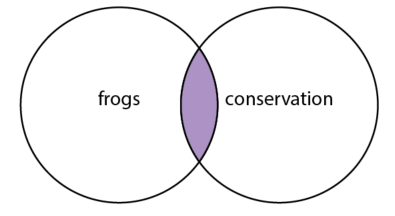
The search engine will find sources that use both of the specified words.
E.g if I am trying to research the conservation effort specifically for frogs:
frogs AND conservation
OR
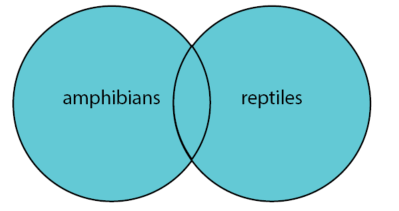
The search engine will find sources that contain either of the specified words.
E.g if I am trying to research find papers regarding anything and everything related to amphibians or reptiles: amphibians OR reptiles
NOT
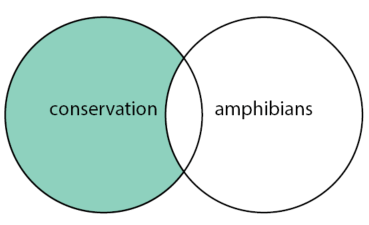
The search engine will not show me the sources with the specified word.
E.g I want to research all conservation of all animals except for amphibians: conservation NOT amphibians
Punctuation
“Quotations“: used when you want to find a specific string of words or phrases. E.g “dog trainer” – rather than giving you sources with the words dog and trainer separately, this string of words will provide sources with dog trainer as the subject of the search.
Asterisks*: used when you want to include all variations of the word in the search. E.g colour* – will provide you sources with the word in plural, in different spellings, and other variations such as color, colourful, colours, colouring, etc.
(Parentheses): used when you want to combine a formula of search strings. For example if I am looking for papers on conservation efforts on a specific list of mammals this is what my search string will look like: (conservation) AND (koala OR kangaroo OR quokka OR opossum).
How to Reference
There are many different reference styles and different assessments, journals, disciplines accept a specific style. To explore a specific referencing style try this link or google the specific referencing style that you need. When writing a formal scientific document (i.e a journal article) you will need in-text citations, that is a sentence with a fact or an idea that is not your own followed by the credit to the original author, and a reference list at the end of your document that provides more information for all of your in-text citations (this is how the reader can find the original source).
Here is a general example of APA, a referencing style often used in scientific writing.
In text citation:
This is my text that I will cite (Last name of Author, year of publication)
Reference list at the end of document:
Author(s). (Year of Publication). Title (Edition). Publisher.
However, when you reference, DO NOT DO IT BY HAND. Use a reference manager like Zotero, Mendeley, or Endnote. Every person has a preference for a reference manager (and some people can be really passionate about their favourite). Make sure you have the corresponding extension downloaded on your writing app (i.e. Word Microsoft) so that you can simply import in-text citations and the reference list right into your document. Additionally, have the reference manager web extension in your browser so that when you come upon a paper that you will use, you can import it with a click of a button.
Common mistakes
Inconsistent formatting
Pick a format and stick with it. An easy way to overcome this mistake is to use a reference manager.
Using quotations2
When writing a scientific document do not pull quotes from the source. Rewrite the information in your own words.
Plagiarizing but still putting a citation
If you copy and paste information from another source, but put a citation at the end of the sentence, this is still plagiarism. You need to put the information in your own words.
No in-text citations
Including a reference list at the end of your document is not enough. You need to specify which parts/ideas/sentences belong to which reference.
Incorrect punctuation
In text citation are always at the end of a sentence before the period: This is the text I am citing (Author, Year).
Overusing citations
Sometimes multiple authors or the same author said the same thing in different ways (eg. a similar experiment has been done by multiple authors, or the same author has refined their theory in multiple publications). In this case you can use the most recent citation and/or the most relevant.
Incorrect source
Make sure that you are crediting the original author for the idea/fact. If you read a journal article and you like an idea that they have written but have cited it to another author – cite the original author. Just because another author wrote an idea/fact in their own words, the idea/fact is not theirs.
Correct source: Darwin first introduced the theory of natural selection and subsequently conceptualized the theory of sexual selection (Darwin, 1859, 1871).
Incorrect source: Darwin first introduced the theory of natural selection and subsequently conceptualized the theory of sexual selection (Shavrova, 2023).
Incorrectly using in-text citations
Including an in-text citation at the end of a paragraph implies that the whole paragraph is the idea of that one author you’re citing. Make sure that each change of idea/sentence gets the correct corresponding citation.
E.g. this is one idea (Author 1, Year). This is the second idea (Author 2, Year).
Additionally, if you have two sentences that follow each other that have the same reference, it’s ok to just cite the last sentence with that source.
E.g This is one idea from an author. This is still the same idea from the same author (Author 1, Year).
Lastly, if you use in-text citations referring to the author in the sentence, do not put a citation again in brackets.
E.g. Author 1 (Year), did an experiment on insects.
Misrepresenting the original source
Make sure that you have thoroughly read the original source that you are citing, to ensure that you will relay the information correctly. Also do not provide the original authors opinion on their work, unless you have actually sought out that authors opinion or they have stated the opinion in the source you are citing.
Incorrect understanding of the paper: The Aldabra rail, a bird endemic to the Seychelles, has re-evolved itself back into existence after previously being extinct (Hume & Martill, 2019).
Correct understanding of paper: A related descendant of the the extinct rail bird, the Aldabra rail, a bird endemic to the Seychelles, has evolved flightlessness. This is an example of repeated evolution (Hume & Martill, 2019).
Providing an opinion of an author without knowing the authors opinion: Hume & Martill (2019) thought this was an incredible finding.
Other Tips
- Can’t access a journal article? Try putting the DOI or article link into SciHub3
- Has your reference manager imported the reference information incorrectly? Paste the DOI into the appropriate tab in the description in your reference manager and the manager should automatically update the information
- Is the reference manager unable to import the correct information and there is no DOI? Put the journal article title into google scholar and click “cite”, then manually input the articles information into the reference manager.
- When in doubt, cite. Better to cite then be called out for plagiarism.
1The Boolean Search method was created by English mathematician George Boole in the 19th century (Source)
2Specific to scientific writing
3The SciHub link is constantly changing so it’s best to just google “SciHub” for the most current working link
References used in this post:
Darwin, C. (1859). The origin of species by means of natural selection. Murray, London.
Darwin, C. (1871). The descent of man, and selection in relation to sex. Murray, London.
Hume, J. P., & Martill, D. (2019). Repeated evolution of flightlessness in Dryolimnas rails (Aves: Rallidae) after extinction and recolonization on Aldabra. Zoological Journal of the Linnean Society, 186(3), 666-672.
Shavrova (2023). How polyphenisms affect sexual selection and sexual conflict [Doctoral dissertation, UNSW].
 Dr. Anastasia Shavrova
Leave a comment